
50% of Leaders are afraid their leadership is at risk if they fail to deliver on AI.
28 January 2026
The Robotics Dividend: Why Physical AI Demands a Structural Reset of Global Infrastructure.
7 March 2026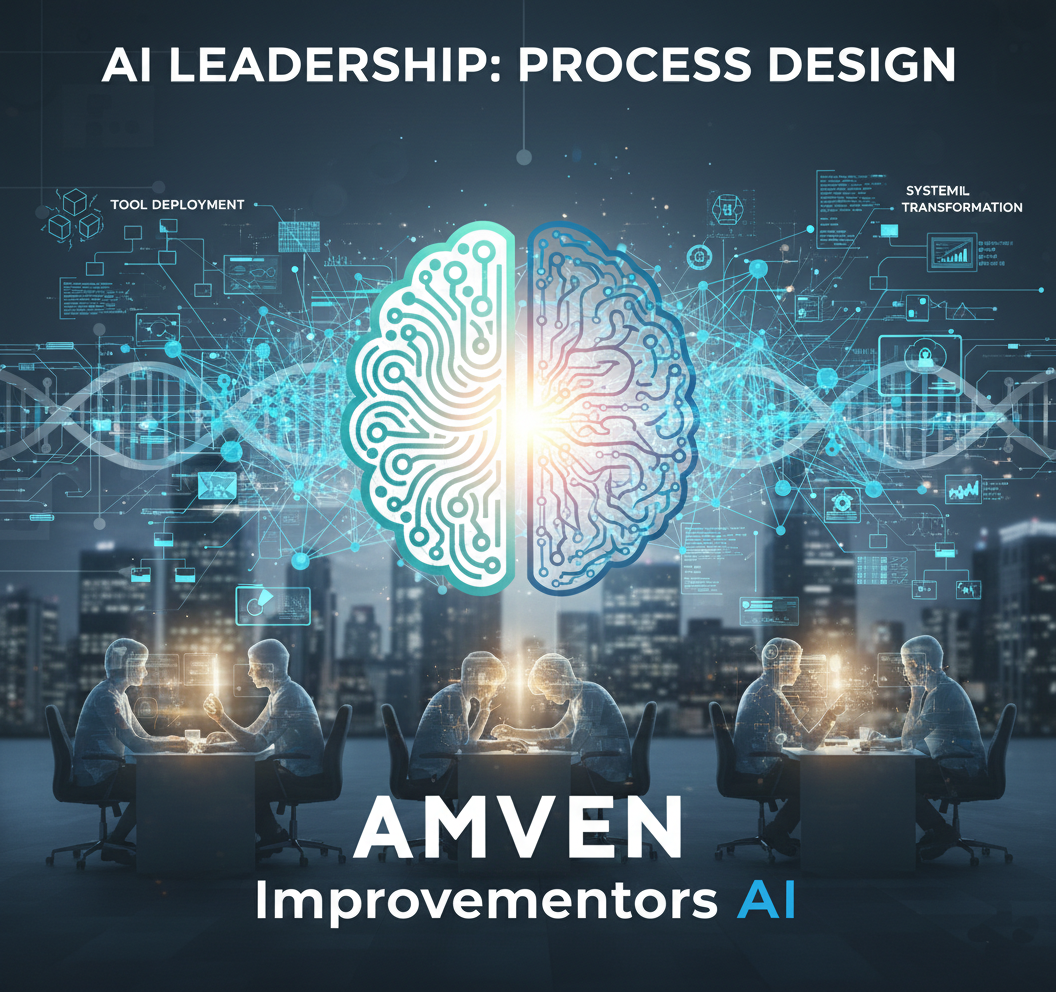

The AI Tide: Why Modern Leadership is About Design, Not Just Deployment
AI currently feels like the early days of 2020.
I don’t mean the lockdowns, the quiet streets or even the challenge of navigating supermarkets via a one-way system (which was seemingly impossible for many!) I mean those tense, liminal weeks when the data was mounting, the warnings were growing louder, and yet most of us were still insistent it wouldn’t truly change the way we lived.
That is the comparison Matt Shumer makes in his recent essay, “Something Big Is Happening.” As a CEO at the coalface of AI development, Shumer argues that what coders are seeing right now—AI evolving from a ‘helpful assistant’ to a tool that simply does the job better than a human – is about to repeat itself across every role that involves a screen. His most-quoted line is a sobering one:
“Nothing that can be done on a computer is safe in the medium term.”
Now, we have seen warnings like these before, I have watched waves like this sporadically wash through organisations for pver 25 years. I’ve seen many ‘game-changing’ tools promised to boards and workforces, only to quietly vanish when no one bothered to change the way people actually worked. This time, I’ll admit, does feel different. The technology is moving faster, and the demos are far more visceral.
But that doesn’t mean the disruption will play out like a sudden pandemic. In my experience, the reality of systemic change is far messier, and very much more interesting (and exciting!)
Why the alarm is starting to resonate
Shumer isn’t a lone voice in the wilderness. Last year, Dario Amodei, CEO of Anthropic, suggested that AI could displace a significant portion of entry-level white-collar roles within a few years. Leaders at firms like Verizon and Amazon have floated similarly stark projections. These aren’t fringe commentators; they are the people building, what they consider to be, the very infrastructure of the future.
In the tech sector, this shift felt like it crept up slowly, then suddenly snapped into place. Eighteen months ago, AI was a useful drafting partner. Today, it is becoming the default for coding, design, legal review, and data analysis. I’ve seen this in our own work at AMVEN: we recently cut processing time for a simple rules-based task by 99.85% using an AI and Automation workflow – for a single set of activities – that equated to an efficiency saving of over £52,000 or the equivilent of 1.8 FTE’s at the level affected.
However, these people involved didn’t disappear. Instead, their roles shifted from ‘performing the mundane and manual tasks’ to ‘designing, clarifying, auditing and quality checking the system, in addition to having the capacity to further add value!’ That is the emerging pattern: the work isn’t necessarily vanishing, but its shape is changing beyond recognition.
The ‘Pandemic’ metaphor: Where it misses the mark (IMO)
While Shumer’s COVID-19 analogy is emotionally resonant, it implies a moment where the world changes overnight by decree. If you have ever led a real-world transformation—whether moving entire offices of colleagues to remote work or stripping £50m in costs from a complex organisation—you know that systemic change is rarely a straight line.
Technology is moving at the speed of light; however, organisations move at the speed of humans.
The data currently supports this. Researchers at Yale’s Budget Lab have tracked ‘high-exposure’ AI roles since the launch of ChatGPT. So far, the share of workers in those roles hasn’t budged. Anxiety is currently outstripping the evidence.
This isn’t a reason for complacency; it’s a clarification of the timeline. AI isn’t a lockdown; it’s a slow-moving tide. The bottleneck isn’t the capability of the AI model – it’s permissions, governance, legacy IT systems, and the deeply human habit of saying, “but this is how we’ve always done it.” is a challenge. You can have the most sophisticated AI tool on the market, but if you haven’t redesigned the workflow or addressed the human incentives, you are simply automating your existing problems.
AI is the future, but it doesnt mean we ignore the past.
History suggests that displacement does not equal elimination. In the 19th century, technology automated 98% of the labour required to produce a yard of cloth. By the logic of today’s ‘AI apocalypse’ narrative, weavers should have become extinct.
Instead, the price of cloth plummeted, demand exploded, and total employment in the weaving industry actually increased for decades. The work changed from manual labour to machine oversight.
The same logic applies to knowledge work. If AI drives down the cost of legal research or document review, the demand for those services will likely rise. The ‘winner’ won’t be the person trying to out-calculate the machine; it will be the professional who uses AI to amplify their judgement, coordination, and problem-solving.
My Take: Strategy over Scaremongering
From where I sit, AI isn’t a story about mass unemployment. It is a forcing function for the work I have spent my career doing: untangling messy processes, stripping out waste, and layering in technology only where it actually moves the needle.
If you lean into AI without changing your underlying processes, you are just optimising for the wrong thing. You’ll add complexity, incur ‘tech debt’, and wonder why productivity hasn’t shifted. That isn’t a failure of AI; it’s organisational inertia with a fresh coat of paint.
The real competitive advantage isn’t owning the best model. It is having the discipline to map your workflows, the clarity to decide what should be automated, and the courage to redesign roles so your people can move into higher-value work.
How Improvementors AI can help you navigate the tide
If this feels like abstract theory, the question remains: where do you start?
At AMVEN, through our Improvementors AI service, we help organisations and SME’s bypass the hype and implement AI in a way that actually makes sense for their bottom line. We work with everyone from small, founder-led teams to large, complex enterprises to:
- Map current workflows to identify where AI will have a genuine, measurable impact.
- Design human-AI workflows that reduce drudgery without sacrificing institutional knowledge.
- Embed the change so your team actually adopts the new way of working, rather than letting a new tool sit idle.
You can explore our tailored services here: https://improvementors.co.uk/services/artificial-intelligence/
AI isn’t going to arrive in a single, world-stopping moment. But it is arriving. The question isn’t whether you’ll be affected by the tide—it’s whether you’re designing the boat you’re sitting in, or just hoping the water stays low.
